WIMP Dark Matter Search with He II
The nature of dark matter remains one of the most compelling open questions in modern physics. While many direct-detection experiments have focused on weakly interacting massive particles (WIMPs) with masses at or above the electroweak scale, there is growing theoretical and experimental interest in light WIMPs with masses below about 10 GeV. Detecting such particles is particularly challenging because elastic scattering from heavy nuclear targets transfers only a very small fraction of the WIMP kinetic energy, often below the detection thresholds of conventional solid-state or noble-liquid detectors. As a result, sensitivity to light dark matter strongly favors detector concepts that combine low energy thresholds with light nuclear targets.
Superfluid helium-4 (He II) is a uniquely attractive target material for light-WIMP searches. Its low atomic mass provides favorable kinematic matching to sub-10-GeV dark matter, substantially increasing the maximum nuclear recoil energy compared to heavier targets such as xenon or germanium. At the same time, He II can be prepared with extraordinary radiopurity at millikelvin temperatures, as impurities and radioactive contaminants are efficiently excluded from the bulk liquid. The absence of electronic excitations below 19.8 eV further suppresses common backgrounds, making superfluid helium particularly well suited for detecting extremely small energy depositions associated with light dark matter interactions.
When a WIMP scatters elastically from a helium nucleus, the recoil energy is converted primarily into elementary excitations of the superfluid, including phonons and rotons. A key detection concept developed for He II exploits the phenomenon of quantum evaporation, in which energetic quasiparticles reaching the liquid–vacuum interface eject individual helium atoms into the vacuum above the surface. Although the kinetic energy of the evaporated atoms is small, their adsorption onto a nearby calorimetric surface releases a much larger van der Waals binding energy, providing an intrinsic amplification mechanism for sub-eV energy deposits. In parallel, nuclear recoils in helium can also produce prompt scintillation light and long-lived triplet He2* excimer molecules, enabling complementary signal channels for event characterization and background rejection.
Our group has played a central role in the development of superfluid-helium dark-matter detector concepts, beginning with early theoretical work demonstrating the feasibility and sensitivity of He-based detectors for light WIMPs. More recently, we have been deeply involved in the experimental realization of these ideas through the HeRALD program, which has achieved the first direct demonstration of quantum-evaporation detection of He II quasiparticles using transition-edge-sensor calorimetry. These experiments have validated key aspects of the detection mechanism, including efficient quasiparticle-to-atom conversion and the use of heat-free superfluid film-blocking techniques, establishing practical energy thresholds well below 1 keV and opening a realistic path toward sensitivity to sub-GeV dark matter.
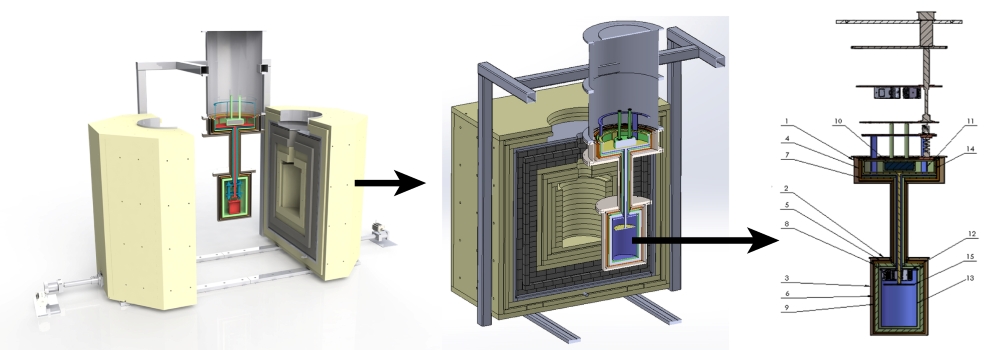
Figure 1: Schematic showing the low-mass WIMP dark matter detector facility to be developed and built by the TESSERACT collaboration.
A defining contribution of our cryogenics group lies in the design, modeling, and operation of the complex cryogenic environments required for these experiments. We develop and implement ultra-low-temperature helium systems that maintain stable superfluid conditions while minimizing parasitic heat loads, vibrations, and backgrounds. Our expertise in superfluid hydrodynamics, heat transport, and helium-surface physics is essential for understanding quasiparticle propagation, quantum evaporation efficiency, and detector response. We also lead efforts in cryogenic safety, system scalability, and integration with advanced sensor technologies, providing the technical foundation necessary to translate fundamental detection concepts into robust experimental platforms.