Research area

Heat Transfer & Prognostic Model Development

Developing physics-based tools to predict temperature, moisture, ignition potential, and thermal performance in complex natural and built environments.

Predicting Ignition Potential of Complex Fuels

Fuel ignition potential is a key driver of damage in wildland and wildland–urban interface fires and a decisive factor in prescribed-fire planning. The Complex-environment Temperature and Moisture Predictor (CeTMP) predicts diurnal temperature and moisture variations—and therefore vulnerability to ignition—for fuels with complex shapes, settings, topography, and material properties under variable environmental conditions. Its high-resolution surface temperature and moisture predictions can also supply time-dependent boundary conditions for coupled computational fluid-dynamics studies.
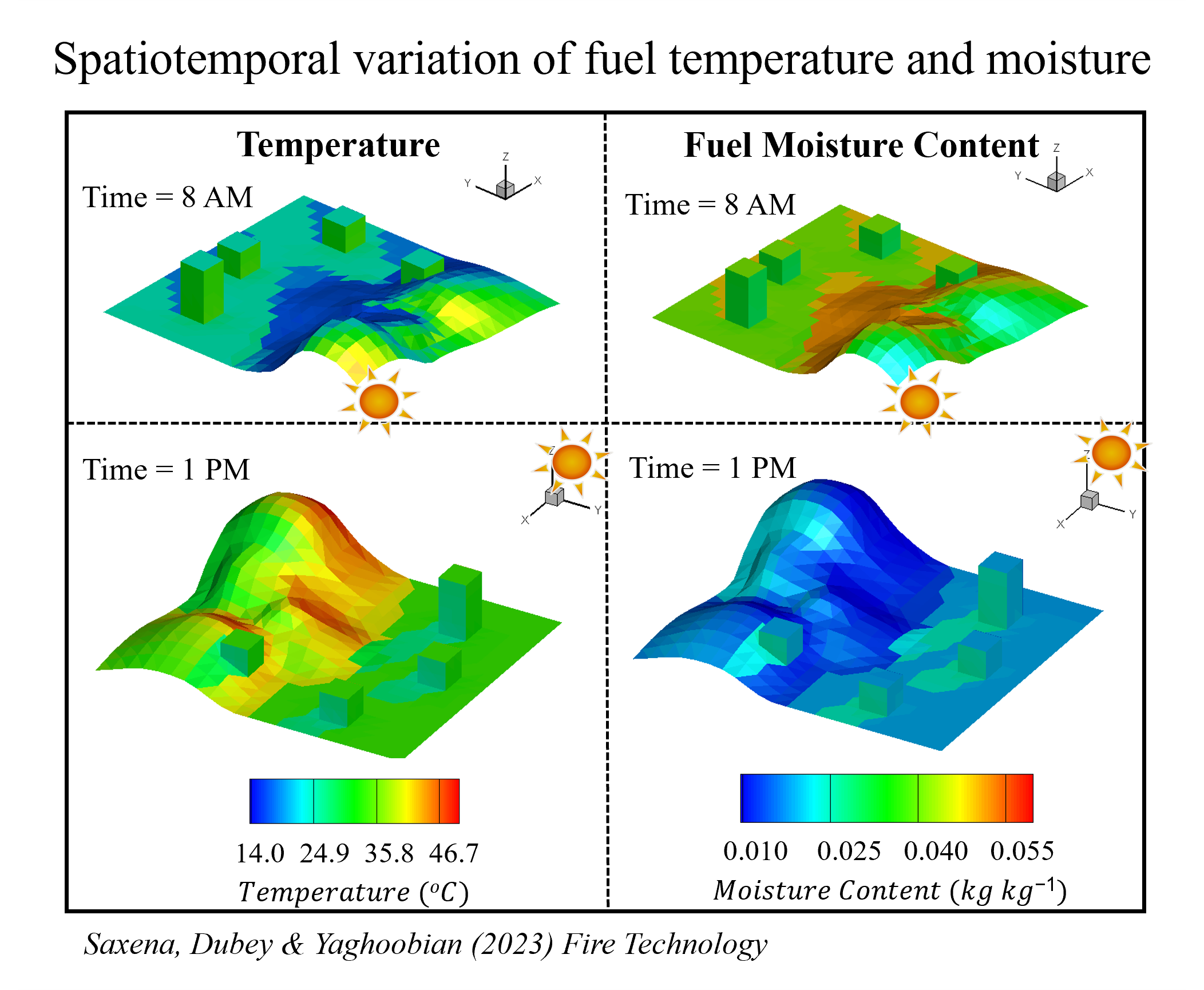
Read the Fire Technology paper: “A Planning Model for Predicting Ignition Potential of Complex Fuels in Diurnally Variable Environments”

CeTMP model outputs showing fuel temperature, moisture, and ignition potential
CeTMP links environmental forcing, material response, and evolving ignition potential.

Thermal Function of Natural Structures

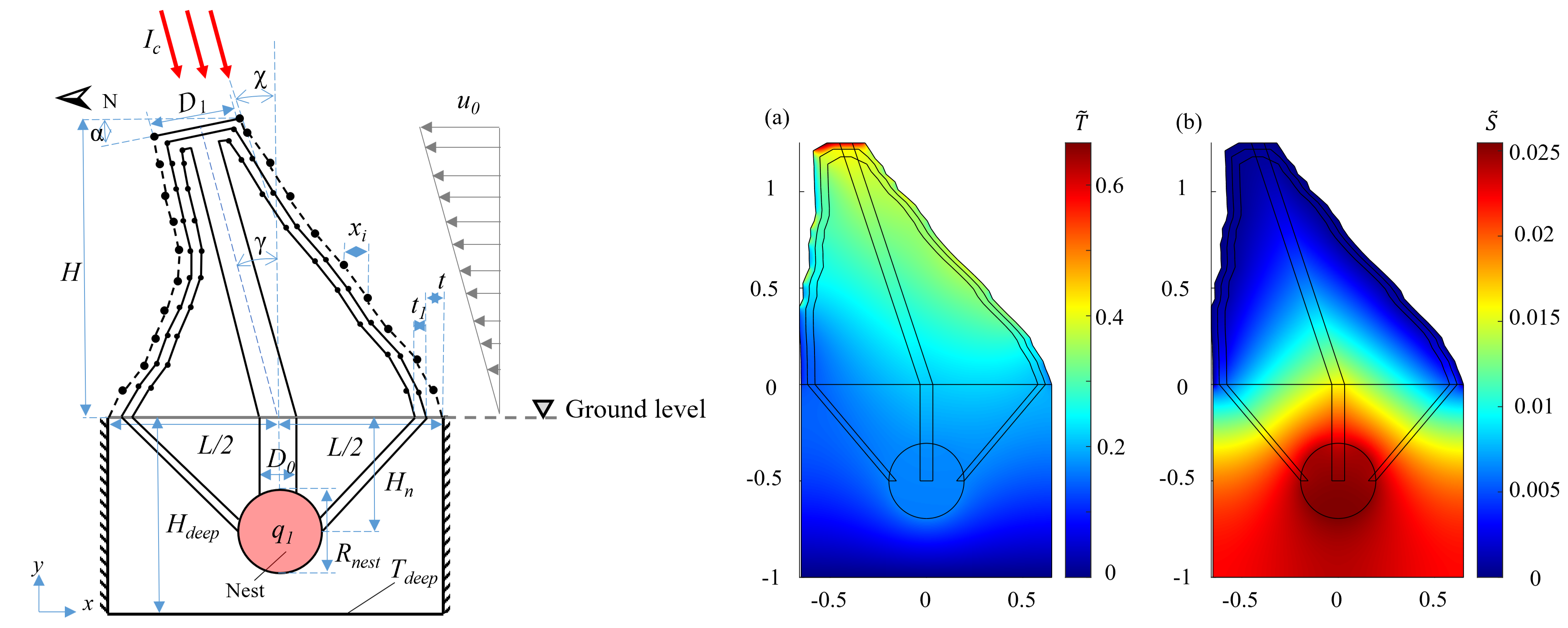
This research examines why termite mounds take such diverse forms by coupling heat transfer, mound architecture, local climate, and colony requirements. For closed-chimney mounds, simulations distinguish the thermal roles of the outer shell, internal chimney, and nest while showing how environmental forcing and mound function jointly shape viable structures.

Read the Journal of Theoretical Biology paper: “The Role of Mound Functions and Local Environment in the Diversity of Termite Mound Structures”

Thermal and flow analysis of the architecture of a closed-chimney termite mound
Environmental forcing and internal transport in a natural ventilation structure.

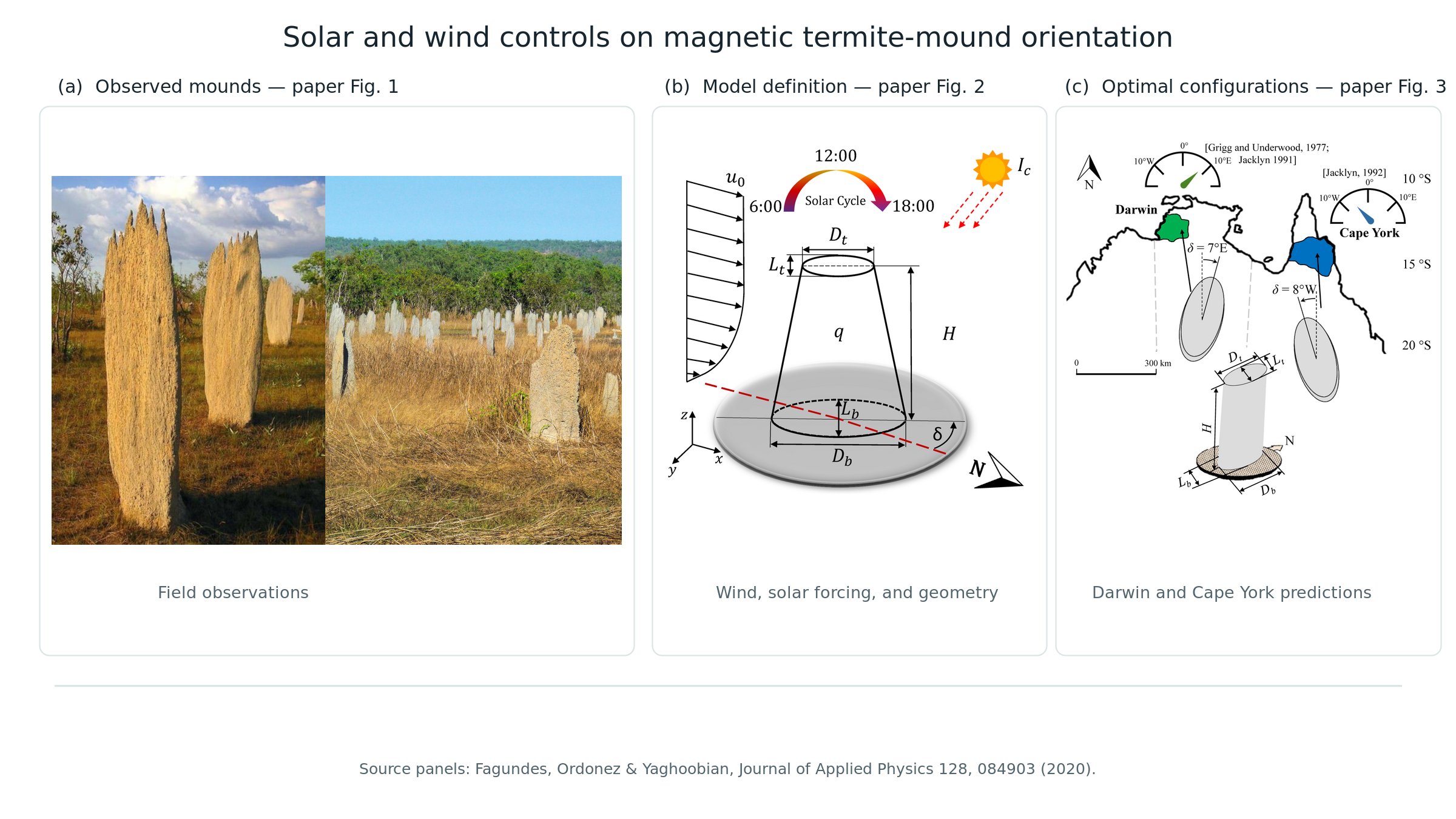
Solar and Wind Controls on Termite-Mound Orientation

A heat-transfer model explains the characteristic north–south orientation and wedge-like form of Australian magnetic termite mounds. The analysis combines time-varying solar irradiance with local wind to identify geometries that distribute heat more uniformly through the mound and limit daily temperature fluctuations at the nest.

Read the Journal of Applied Physics paper: “The North–South Orientation of Australian Termite Mounds Is Due to the Sun and Local Wind”

Observed Australian magnetic termite mounds, the paper's heat-transfer model definition, and predicted optimal mound configurations for Darwin and Cape York
Paper Figures 1–3 connect field observations, the solar-and-wind model definition, and predicted regional mound configurations.


Building Energy Analysis

Models are needed to understand thermal interaction between buildings and their surroundings. This work examines how building construction, canyon geometry, weather, and their combinations modify heat transfer, microclimate, and energy demand.

Animated building-energy model showing thermal interaction between a building and its surroundings
Coupled building and urban-environment energy analysis.